|
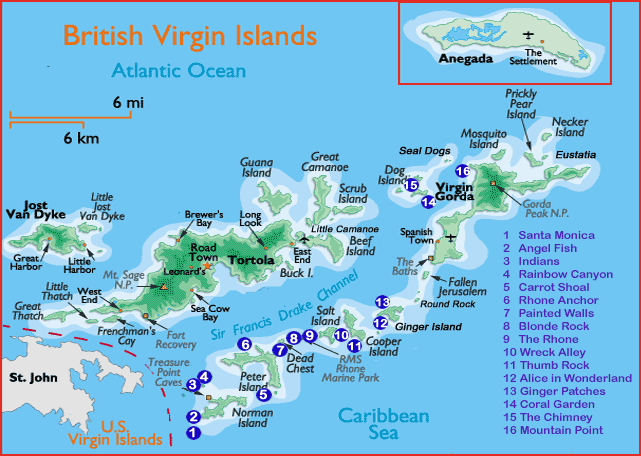
1) Santa Monica
Rock - Off Norman
Island (weather
permitting)
A truly spectacular
dive site and one of
our favorites! The
site ranges in depth
from 20 to 100 feet.
The underwater
topography is made
up of a series of
rocky pinnacles,
some rising to just
10 feet below the
surface. At Santa
Monica Rock, you may
have the opportunity
to see reef sharks,
sea turtles and
eagle rays among
others.
Back to Top
|
|
2) Angelfish
Reef - Norman Island
Angelfish reef runs
from 30 to 80 foot
depths and is
exposed to the open,
Caribbean Sea. As a
result, it is
frequented by
several large and
impressive, deep
water species such
as eagle rays and
southern stingrays.
The sparkling white,
sandy bottom at The
reef is host to many
bottom dwellers
including snake eels
and Moray eels.
Back to Top
|
|
3) The Indians -
Off Norman Island
Whether scuba diving
or snorkeling, the
Indians are a
favorite for all
ages and abilities!
This marvelously
unique rock
formation, looms out
of the water from a
depth of
approximately 10ft
to 50ft and features
a tunnel which
divers (with scuba
equipment) may pass
through to the other
side. There is a
spectacular variety
of corals at the
Indians as well as
an abundance of reef
fish.

Back to Top
|
|
4) Rainbow
Canyons - Pelican
Island
This is an ideal
dive site for
beginner and
advanced scuba
divers and has a
spectacular array of
coral formations.
Rainbow Canyons
ranges in depth from
20 to 60 feet and is
home to several
colonies of garden
eels, a huge variety
of reef fish and
several nurse sharks
as well! Don't miss
the Rainbow Canyons
when you dive the
BVI!!!
Back to Top
|
|
5) Carrot Shoal
- Between Peter &
Norman Island
(weather permitting)
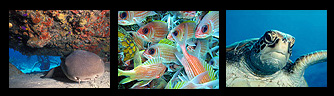
Probably one of the
more amazing night
dive sites to be
found anywhere, this
oval-shaped reef
formation is 20 to
60 feet deep and
boasts resident sea
turtles, beautiful
French angelfish,
nurse sharks and
more!
Back to Top
|
|
7) Painted Walls
- Deadchest Island
(weather permitting)
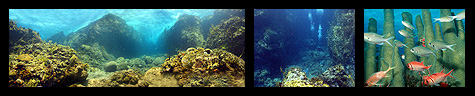
It would seem as
though an artist of
the impressionist
era had plied their
skills at Painted
Walls! The walls
where two,
underwater valleys
converge are teaming
in colorful sponges
as well as soft and
hard corals, looking
remarkably similar
to an artist's
pallet! The main
inhabitants at
Painted Walls are
nurse sharks,
barracuda and
lobsters. This BVI
dive site with
depths of 30 to 50
feet is a great for
beginner and
advanced divers.
Back to Top
|
|
8) Blonde Rock -
Between Salt Island
and Peter Island
(weather permitting)
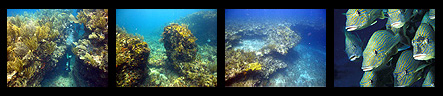
This spectacular,
underwater
amphitheater, which
lies between 20 and
60 feet deep,
features both large
and small overhangs.
There is a wide and
colorful variety of
coral formations and
you may occasionally
glimpse some sea
turtles, sharks and
rays of various
species along with
lobsters, crabs and
conch.
Back to Top
|
|
9)
The Wreck of the
R.M.S. Rhone - Salt
Island
Certainly the most
popular and well
known of all BVI
dive sites, the
Royal Mail Steamer
"Rhone" was the
setting for the hit
movie "The Deep",
starring Nick Nolte
and Jacqueline
Bissett. The wreck
itself is
fascinating to
explore with parts
of her still in
tact. The Rhone
foundered during a
hurricane and is
lying in depths from
20 to 80 feet. She
is colorfully
decorated by a wide
variety of corals
and is home to
several resident
barracuda, sea
turtles, stingrays,
angelfish,
yellowtail snappers
and many other
varieties of fish
life visit the
Rhone. This is a
"must see" for all
levels of scuba
divers!

Back to Top
|
|
10) Wreck Alley
- Cooper Island
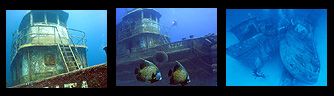
Wreck diving
enthusiasts will be
thrilled to explore
three wrecks in a
row lying in 50 to
80 feet of water, on
a sandy bottom and
right next to a mini
wall! Plenty of
stingrays and a
great opportunity
for spectacular,
underwater
photography!
Back to Top
|
|
11) Thumb Rock -
Off Cooper Island
Off Cooper Island is
this intriguing rock
formation which,
oddly enough
resembles its name,
attracts a wide
variety of fish life
including; tarpon,
queen angelfish,
French angelfish and
the odd sea horse
has been spotted
here from time to
time!
Depth ranges from
40ft to 70ft.

Back to Top
|
|
12) Alice in
Wonderland
This beautiful dive
site is located in
South Bay on Ginger
island it ranges in
depth from 40ft to
100ft, there are
amazing mushroom
shaped coral
formations
throughout this dive
thus the name. It is
often frequented by
spotted eagle rays,
spade fish and
stingrays. We have
also seen the
occassional
caribbean reef shark
swimming along the
reefs edge.
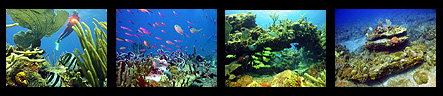
Back to Top
|
|
13) Ginger
Patches
Ginger Patches is
located on the north
side of Ginger
island, it starts
off in about 20 ft
of water and slowly
descends down to a
depth of 70ft, it is
a good alternate
dive for Alice in
Wonderland if the
weather is rough. It
has a spectacular
array of coral in
the shallow depths,
lots of nooks and
crannys for crabs
and lobsters.
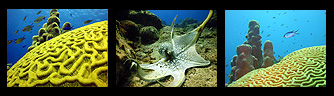
Back to Top
|
|
14) Coral Garden
As the name
suggests, Coral
Gardens boasts large
beautiful coral
formations. These
consist primarily of
mounds of boulder
star coral and great
star coral, well
embellished with
brain corals, tube
sponges, sea fans
and gorgonians. A
recent addition to
the dive site is the
remains of Atlantic
Air BVI's Shorts 360
airplane. The plane,
without wings or
tail, sits in the
sand patch in about
40 feet of water.
Back to Top
|
|
15) The Chimney
The Chimney is
really two sites in
one. Directly
below the moorings,
in 30 to 40 feet ,
are several massive
coral heads rising
up from a sand and
rubble bottom. This
is the Fish Bowl, so
named because of the
many friendly fishes
abiding here. To
find the Chimney
pass through the
Fish Bowl heading
towards the northern
shore of the bay.
Take the time to
explore the several
canyons and ridges
that run parallel to
shore. Work your way
around the point. At
a depth of around 45
feet or so, cut back
and follow a canyon
back towards shore.
This should lead you
under a large
beautifully
encrusted archway
encrusted with cup
corals and brightly
colored sponges.
Once through the
arch you'll enter a
steep-walled narrow
corridor which ends
with two huge rocks
almost touching. The
narrow slot between
these two boulders
is the Chimney, so
named because of its
resemblance to a
rock-climbing
formation of the
same name.
Back to Top
|
|
16) Mountain
Point
Large coral heads,
overhangs and sand
patches are the
basic reef structure
here. Grunts, parrot
fishes are common.
Look for lizard
fishes in and around
the sand patches. In
the summertime large
tarpon can be seen
sweeping through the
huge schools of tiny
fry. There are some
caves and large
bowls or grottos in
the bedrock. Be
careful of surge in
the shallows.
Experienced divers
can venture through
the "cow's mouth,"
exploring the narrow
cut between the rock
formations. Once on
the other side head
down the steep
slope. There is
generally more
action here. Large
jacks, barracudas
and maybe a ray are
possible passersby.
There is a colony of
garden eels in the
sand here.
Back to Top
|